 Image 1 of 5
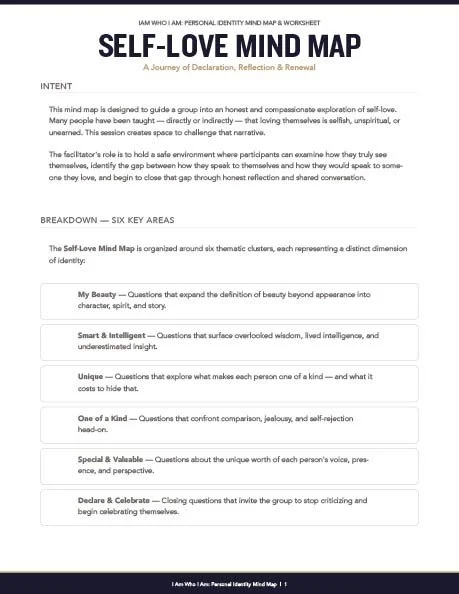 Image 2 of 5
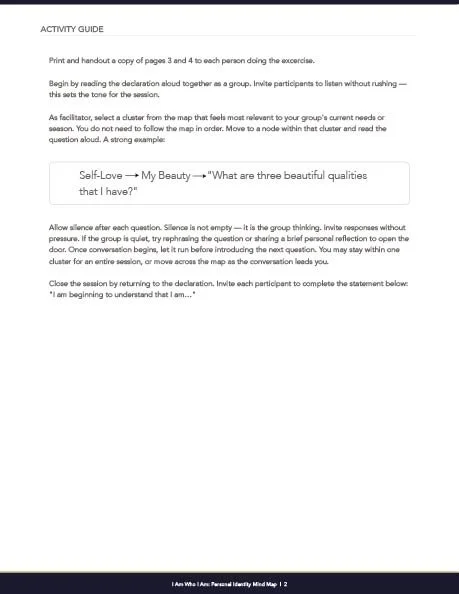 Image 3 of 5
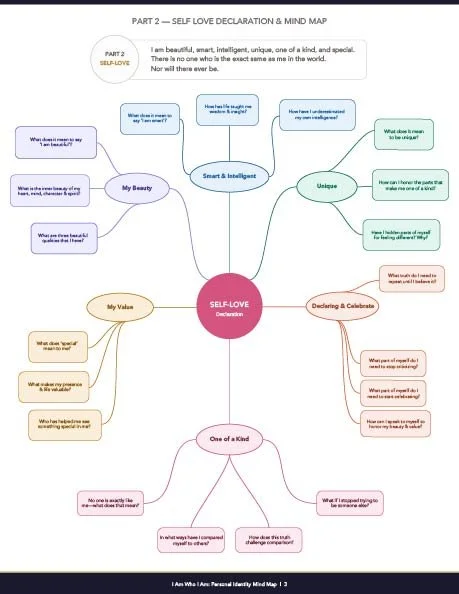 Image 4 of 5
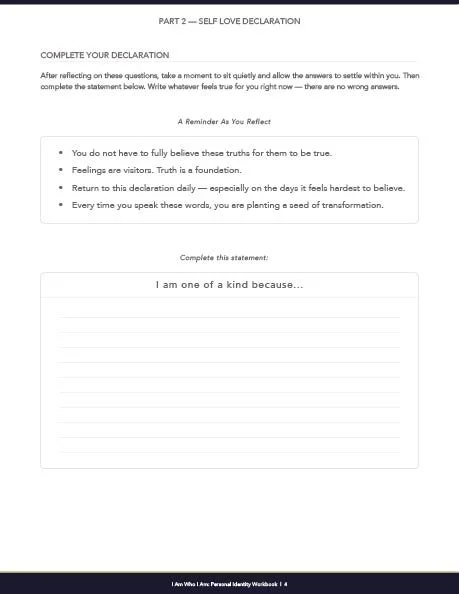 Image 5 of 5
Format: PDF
Page Count: 4 (Not including Cover)
Group Activity Guide
What This Is
Most people have been taught — directly or indirectly — that loving themselves is something they have to earn. That it is conditional. That it comes after the weight is lost, the mistake is fixed, the approval is won, or the wound is healed. This resource exists to challenge that belief at the root.
Part 2 of the I Am Who I Am series is a group facilitation experience built around one of the most quietly revolutionary declarations a person can make: I am beautiful, smart, intelligent, unique, one of a kind, and special — and there is no one in the world exactly like me.
The Part 2 bundle includes a Mind Map for group facilitation and a Reflection Worksheet for personal written exploration. Together they create a complete guided experience — one that moves a group from surface-level conversation into honest, transformative dialogue about how they truly see themselves, and what it would take to begin seeing themselves differently.
How to Facilitate
Begin by reading the declaration aloud as a group. Then ask: "Which word in that declaration is hardest for you to say about yourself right now?" Do not move past this question quickly. The answers will tell you exactly where the group is — and where the map needs to take them.
Navigating the Map
Select a cluster based on what surfaces in the opening. You do not need to cover every cluster in a single session. It is far better to go deep into two clusters than to skim across all six. Choose a node within your selected cluster and read the question aloud. A strong example:
Self-Love → One of a Kind → "In what ways have you compared yourself to others instead of appreciating who you are?"
Holding the Space
Self-love is tender territory. Some participants will have spent decades being told — by people they trusted, by institutions they belonged to, by the voice in their own head — that they are not enough. When someone shares something vulnerable in this session, resist the urge to fix it, reframe it too quickly, or move to the next question. Let the group witness each other. That witnessing is itself an act of healing.
Redirecting the Conversation
If the conversation drifts into self-criticism or comparison, gently redirect with curiosity rather than correction: "Where do you think that belief came from?" or "What would it look like to see that part of yourself differently?" These questions create movement without dismissing what was shared.
Closing the Session
End by inviting each participant to speak one thing they are choosing to celebrate about themselves — something specific, not general. Then close together with the completion statement:
I am one of a kind because…
Encourage participants to finish that sentence out loud if the group has built enough trust, or in writing if the session calls for more privacy.
Format: PDF
Page Count: 4 (Not including Cover)
Group Activity Guide
What This Is
Most people have been taught — directly or indirectly — that loving themselves is something they have to earn. That it is conditional. That it comes after the weight is lost, the mistake is fixed, the approval is won, or the wound is healed. This resource exists to challenge that belief at the root.
Part 2 of the I Am Who I Am series is a group facilitation experience built around one of the most quietly revolutionary declarations a person can make: I am beautiful, smart, intelligent, unique, one of a kind, and special — and there is no one in the world exactly like me.
The Part 2 bundle includes a Mind Map for group facilitation and a Reflection Worksheet for personal written exploration. Together they create a complete guided experience — one that moves a group from surface-level conversation into honest, transformative dialogue about how they truly see themselves, and what it would take to begin seeing themselves differently.
How to Facilitate
Begin by reading the declaration aloud as a group. Then ask: "Which word in that declaration is hardest for you to say about yourself right now?" Do not move past this question quickly. The answers will tell you exactly where the group is — and where the map needs to take them.
Navigating the Map
Select a cluster based on what surfaces in the opening. You do not need to cover every cluster in a single session. It is far better to go deep into two clusters than to skim across all six. Choose a node within your selected cluster and read the question aloud. A strong example:
Self-Love → One of a Kind → "In what ways have you compared yourself to others instead of appreciating who you are?"
Holding the Space
Self-love is tender territory. Some participants will have spent decades being told — by people they trusted, by institutions they belonged to, by the voice in their own head — that they are not enough. When someone shares something vulnerable in this session, resist the urge to fix it, reframe it too quickly, or move to the next question. Let the group witness each other. That witnessing is itself an act of healing.
Redirecting the Conversation
If the conversation drifts into self-criticism or comparison, gently redirect with curiosity rather than correction: "Where do you think that belief came from?" or "What would it look like to see that part of yourself differently?" These questions create movement without dismissing what was shared.
Closing the Session
End by inviting each participant to speak one thing they are choosing to celebrate about themselves — something specific, not general. Then close together with the completion statement:
I am one of a kind because…
Encourage participants to finish that sentence out loud if the group has built enough trust, or in writing if the session calls for more privacy.