The Paradox of Being A True Leader
Five Ideas About Leadership That You Need To Rethink
Podcast | Video | Artifact
Disclaimer: The ideas in this article was written by a Human.
Dear Intelligent Reader,
I have learned many things in my life, and one thing that has always boggled my mind is the ambiguity surrounding the word “leadership.” There are so many different ideas about what it means to lead and to be a leader. Leadership is a subject we have all heard about, but much of what we learn about being a leader isn’t always accurate.
Many schools of thought teach that leaders are born, while others teach that leaders are made. Some believe that only a select few were made to lead the masses — that leadership is about having followers, and if no one is following you, then you are not a true leader. These ideas may have some merit, but I believe they lack the essence of what true leadership is really about.
When I was in the military, I became engrossed in the idealism of what it meant to be both a leader and a follower. It was embedded in us to follow orders and not break the chain of command. Everyone had someone to report to, and everyone had to be as strong as the person next to them.
At the time, I was fascinated by historical figures like Napoleon Bonaparte, Julius Caesar, Sun Tzu, Miyamoto Musashi, and others. I wanted to know what made these great figures stand apart from the crowd. I wanted to know what leadership meant to them. So, I began a self-study on leadership.
I found a book called Leadership: A Warrior’s Art. The book was filled with old ideas and writings from ancient philosophers, specifically about what it means to be a leader. In that book, I learned things about leadership that went contrary to much of what we are taught about leadership today.
Through my personal studies, I have come to believe that leadership has more to do with a person’s character than it does with a skill set. I believe every person is born with the capacity for leadership; however, it is up to each and every one of us to become a true leader.
I believe leadership is an attribute that we already possess as mankind, but it is also something that must be developed through knowledge, time, and experience. It requires the ongoing cultivation of character and mindset.
This is something our world suffers from today because character development is not prioritized nearly as much as it should be. In fact, I believe many of the problems we have in our societies, governments, businesses, communities, and families come from a lack of understanding and development of true leadership.
Let me ask you a question.
On a scale of 1 to 10, how big of a role do you believe leadership plays in your life, your home, your family, your job, your business, and your community? Let 10 represent a very large role and 1 represent almost no role at all.
If you chose a high number, great! You understood the assignment. If you chose a low number, you may not fully appreciate all the time, energy, decision-making, and responsibility it takes to run and sustain a home, family, school, business, or community.
Here’s two more questions:
Do you believe that you are a leader?
Do you even know what a true leader looks like?
Here are three statements I want you to think about:
Nothing is started or created without someone first deciding to do it.
Nothing is improved without someone deciding to improve it.
No problem can be solved without someone deciding to solve it.
Do you agree or disagree with those statements?
Do you realize how little progress we would have made without true leaders? Nothing would get done if someone didn’t first decide that it needed to be done. Even something as simple as making your bed in the morning or cleaning and organizing your room can be an act of leadership.
My dear reader, here is an ultimate truth that most of us forget: We were made in the image of the Almighty Creator and Leader of the cosmos. Since we have our image and likeness from that Eternal One, aren’t we also called to be creators and leaders as well?
Think about it.
I want to take this time to debunk a few ideas you may have been taught about leadership and what it means to be a leader. If you are familiar with these ideas and hold them to be true, then I ask you to seriously consider the things you are about to read and take them to heart.
Myth 1: The Opposite of a Leader Is a Follower
I have heard this idea for most of my life, and even now, it never fails. When I ask people what the opposite of a leader is, 99% of the time they say, “A follower.”
I believe this is far from the truth, and here is why.
In creation, you will find that there exist two or more sides to everything. If I ask you what the opposite of light is, you would say darkness. What is the opposite of heat? You would say cold. What is the opposite of positive? You would say negative.
To be opposite means to be completely contrary or opposing to the other side — one being the absence or contradiction of the other.
If you search for the opposite of a leader in a dictionary or online, you may see words like “follower” or “supporter.” But I don’t believe that is necessarily accurate. Why? Because you can be a leader and a follower at the same time. They are not necessarily opposites of each other.
To prove that notion, I ask a simple question:
Can you lead others while following someone else’s lead at the same time?
Absolutely.
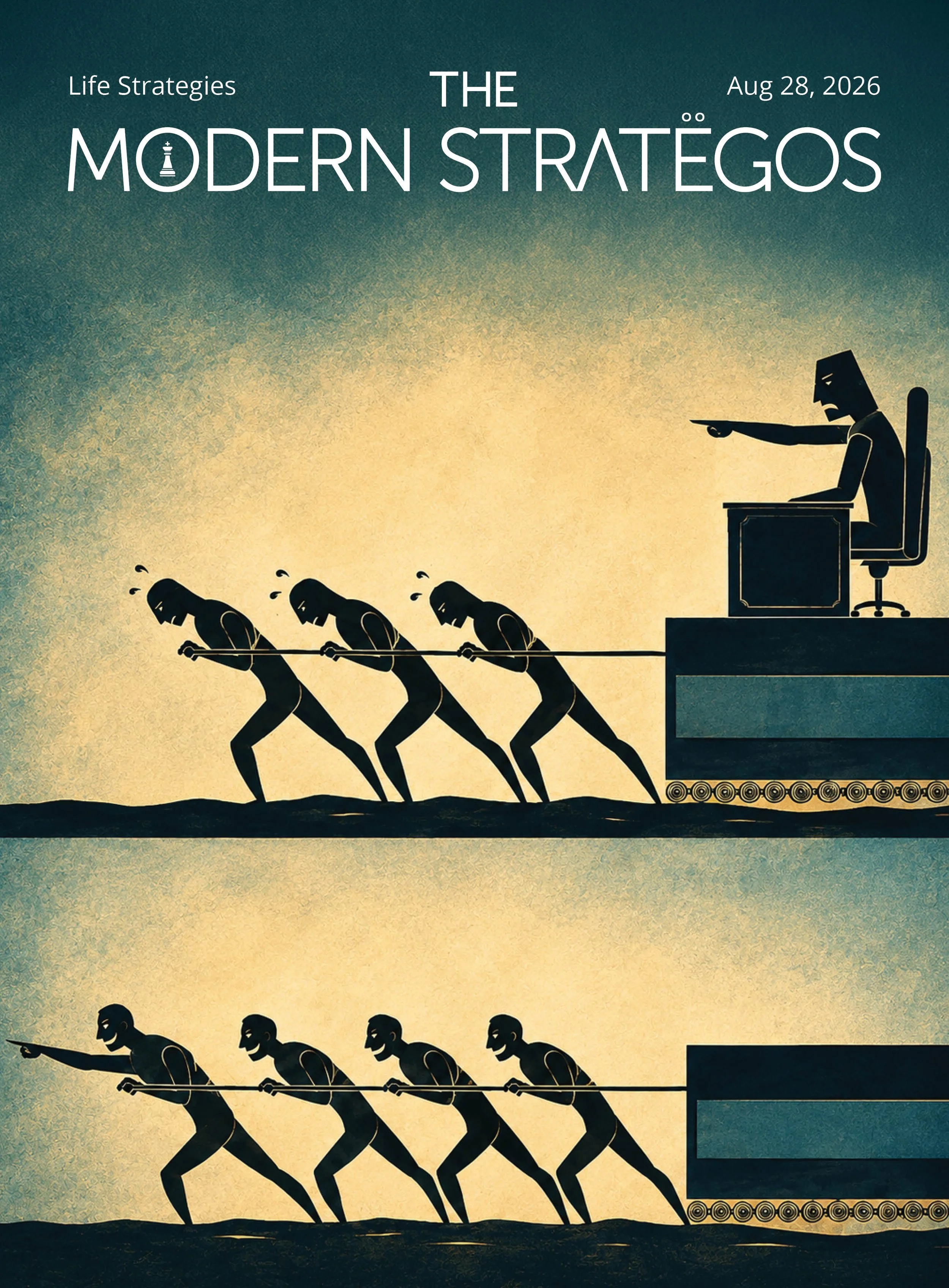
I tell you the truth: The opposite of being a leader is not being a follower. It is being a tyrant, an oppressor, a dictator, or even a bully. Being a leader represents the positive expression of authority, while being a tyrant represents the negative expression of authority.
A leader is one who rules righteously. A tyrant is one who rules wickedly.
A leader uplifts the people. A tyrant holds the people down.
A leader relies on truth. A tyrant relies on lies.
They both exercise authority, but they do so in opposing ways. That is why I believe you cannot truly be a leader and a tyrant at the exact same moment. It is like being cold and hot, or dry and wet, at the exact same time. You are operating as one or the other.
Yes, you can rule with a leadership spirit in one moment and then operate with a tyrannical spirit in the next. But you cannot really be both at the exact same time.
It’s like the difference between a Jedi Master and a Sith Lord. One serves the light, while the other serves the darkness — for my fellow Star Wars fans.
Myth 2: Some People Were Made to Follow and Some Were Made to Lead
The idea that some people were made to follow while others were made to lead is another fallacy — a false idea.
The truth is that everyone was born with the ability and calling to lead. Eventually, at some point in your life, you will find yourself in a position of authority.
Leadership isn’t only about being in charge of other people. It is also about making decisions and taking charge of your day-to-day life. It is about leading within your area of gifting and expertise. When you become an expert in a particular craft or master a specific skill set, you become a leading authority within that area.
Also, think about what happens when someone becomes a parent. They automatically become an authoritative figure in the lives of their children. They have the opportunity to become either a leader or a tyrant in the way they exercise that authority.
Unfortunately, most of us do not adequately prepare ourselves for this incredibly important responsibility.
Myth 3: You Have to Have Many Followers to Be Considered a Great Leader
This is another fallacy that we see playing out even today.
True leaders don’t seek followers, but followers are always looking for true leaders.
The truth is that your number of followers does not determine your level of greatness. One example of this can be seen on social media. So many people are vying to gain as many followers as possible on their social media platforms because they believe that the more followers they have, the greater or more important they are.
But great leaders don’t seek to develop more followers.
They seek to develop more leaders.
For example, I have kids, and one of my duties as a parent is to make sure they grow up to become self-sufficient, capable of making sound decisions, and prepared to take the lead in their own lives. The more they grow and mature, the less they should depend on me to do everything for them.
That is part of leadership.
Myth 4: Leadership Is Complicated and Hard
This is far from true.
True leadership is not necessarily hard or complicated. In fact, it can be simple when it is understood and practiced correctly. However, it can become hard and complicated when done incorrectly.
Most of us look at the things leaders do and perceive them as difficult and complicated. But the truth is that, over time, it can be harder and far less beneficial not to take the lead in your life.
Just look at the marketplace, and you will see this principle at work. The people who become leaders are often those who produce things that are beneficial and have a positive impact on society, rather than those who simply consume more while contributing less.
Then there are those who destroy out of selfish desires. They operate more like tyrants than leaders. They may occupy positions of power, yet they use that power to do more harm than good.
True leadership is more about working with the mind and being driven by a moral compass than it is about merely working with the body. When you learn how to lead correctly, you begin to see how simple many of its principles really are.
That is not to say leadership isn’t challenging. It certainly can be. But those challenges can help make you stronger, wiser, and more capable as a leader.
When a true and righteous leader is in power, the people rejoice. But when a wicked tyrant is in power, the people groan.
The determining factor is the spirit and mindset of the one who holds the power — whether they choose to serve the light or the darkness.
Myth 5: Men Are Better Suited for Leadership Than Women
This statement is not entirely true.
Yes, I believe that men play a key role in society by taking the lead in governing a society. However, your capacity for leadership is not determined by your gender, age, ethnicity, nationality, or skin tone. None of these things ultimately determine whether someone will become a true leader.
Men and women are both called to be leaders within their areas of gifting, expertise, and respective roles in society. We all have gifts, talents, and abilities that were given to us at birth.
When you get married and become a parent, whether you are a husband or wife, father or mother, both of you are called to exercise leadership within your household. Even though I believe the husband is supposed to be the head of the household, the wife still has an important leadership role to play within the development of their estate, family, and future.
Ultimately, I believe leadership development begins at home, but it doesn’t end there.
It extends into our neighborhoods, our communities, our schools, our workplaces, our businesses, and our social organizations.
It starts with you, and it continues through the lives you touch — through the people you inspire, the thoughts you think, the words you communicate, the deeds you do, and the wealth you build and share.
The Bible teaches that if a man seeks to be in charge and hold the public office of an overseer, he desires an excellent task. But it also teaches that he must first be blameless and beyond reproach within his own household.
This principle of demonstrating sound leadership at home applies to women as well. Both men and women should demonstrate that they can lead well within their own families before seeking greater authority within the community.
Both men and women must manage their own households well, because if they cannot properly manage their own household, how will they take care of greater responsibilities within the community or even the nation?
Both men and women should be well-seasoned and mature as leaders before being appointed to high offices carrying great authority and responsibility.
And so, my dearest reader, I pray that you unlock your true potential as a leader in your life. I pray that you choose to serve the light as a leader rather than serving the darkness as a tyrant.
Until next time, have a blessed day.
Yours truly,
The Modern Strategos
Below are some questions to consider. Please like, leave a comment, share with someone who you think this can help. Follow me for more life strategies.
Did you find this article helpful?
Did you learn anything new about leadership?
Is there an idea that was expressed that you disagree with?
What is the biggest takeaway for you?